
US-China Bilateral Summit and Strategic Rivalry
The Beijing summit concluded with a definitive shift in the global order, as the US pivoted to a conciliatory stance that validated China's demand for 'equal footing.' Post-summit analysis has solidified around a narrative of US strategic retreat and unreciprocated diplomacy, characterized by the suspension of arms sales to Taiwan and the recognition of Beijing as a peer superpower.
- PRE-SUMMIT POSTURING: Initial coverage highlights the strategic friction in technology and intelligence, with papers noting US vulnerability due to the Iran conflict.
- REDUCED AMBITIONS & PRAGMATIC DETENTE: As the summit begins, the narrative shifts to a deflated focus on superficial PR wins and conciliatory tones, reflecting a US retreat from previous grand strategic goals.
- GEOPOLITICAL REALISM & TAIWAN WARNINGS: The summit concludes with Xi Jinping asserting dominance via a stern public warning on Taiwan, which is framed by the press as a jarring corrective to Trump's conciliatory flattery.
- STRATEGIC REALIGNMENT & PARITY: Post-summit analysis solidifies around a narrative of US capitulation, focusing on the suspension of arms sales to Taiwan and the legitimization of China as a peer superpower.
Paper Trail · Full Arc
US-China Bilateral Summit and Strategic Rivalry
The Beijing summit concluded with a definitive shift in the global order, as the US pivoted to a conciliatory stance that validated China's demand for 'equal footing.' Post-summit analysis has solidified around a narrative of US strategic retreat and unreciprocated diplomacy, characterized by the suspension of arms sales to Taiwan and the recognition of Beijing as a peer superpower.
Story Phases
PRE-SUMMIT POSTURING
11 May — 12 MayInitial coverage highlights the strategic friction in technology and intelligence, with papers noting US vulnerability due to the Iran conflict.
Diplomatic agenda vs. domestic security concerns and regional complications.
REDUCED AMBITIONS & PRAGMATIC DETENTE
13 May — 14 MayAs the summit begins, the narrative shifts to a deflated focus on superficial PR wins and conciliatory tones, reflecting a US retreat from previous grand strategic goals.
Managing decline; transactional diplomacy in the shadow of domestic and regional crises.
 New York Times
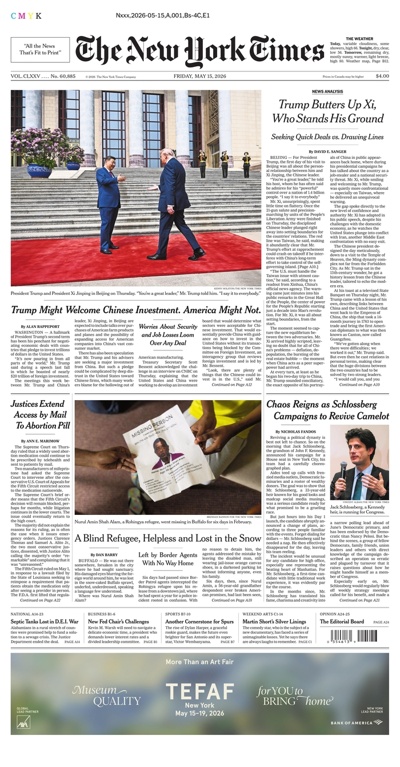
GEOPOLITICAL REALISM & TAIWAN WARNINGS
15 MayThe summit concludes with Xi Jinping asserting dominance via a stern public warning on Taiwan, which is framed by the press as a jarring corrective to Trump's conciliatory flattery.
Strategic mismatch; Chinese geopolitical firmness vs. US transactional desperation.
 Washington Post
STRATEGIC REALIGNMENT & PARITY
16 May — 21 MayPost-summit analysis solidifies around a narrative of US capitulation, focusing on the suspension of arms sales to Taiwan and the legitimization of China as a peer superpower.
Strategic retreat; Beijing's optics victory and the emergence of a new bipolar global order.
Newspaper Stances
New York Times
Highly critical of the administration's tonal shift, framing the outcome as an unrequited courtship and an embarrassing reversal of hardline policies.
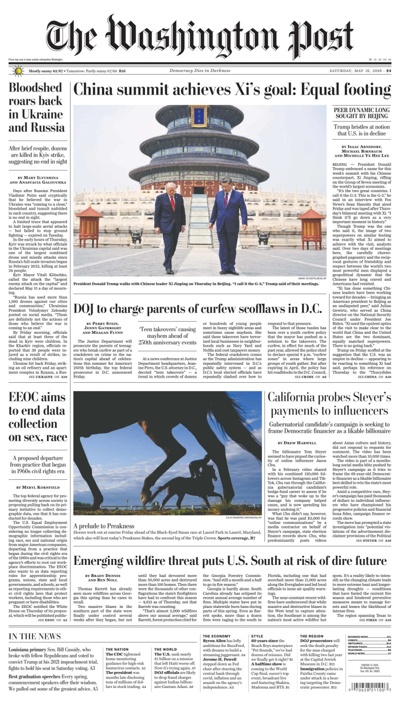
Washington Post
Frames the summit as a historic milestone for Beijing, emphasizing the achievement of strategic parity and 'equal footing' with the US.
Wall Street Journal
Maintains a business-focused lens, though it aligned with broadsheets in highlighting the severity of Chinese warnings on Taiwan.
Chicago Tribune
Focuses on concrete policy repercussions, specifically the impact on Taiwan's defense status.
Los Angeles Times
Shifted from process-oriented neutrality to directly questioning the US executive's negotiating competence.
Coverage Map
Daily Log
At China summit, did Xi outplay Trump?
Final wave of summit coverage settles into a narrative of an unreciprocated diplomatic effort and the strategic outmaneuvering of the US executive.
China summit achieves Xi’s goal: Equal footing
Consensus framing of a structural realignment where China secures peer status and the US makes concrete concessions on Taiwan arms sales.
Trump Butters Up Xi, Who Stands His Ground
A near-universal broadsheet alignment behind a narrative of Chinese assertiveness and US transactional desperation, contrasting with New York Post's optimism.